
The Evergreen Story: From Historic Church to Premier Listening Room
The Spark at the Fire Hall (1991–1998)
In 1991, a dedicated group of local music enthusiasts founded the Fundy Folk Association as a registered non-profit society with a simple, passionate mission: to enrich the culture of the Annapolis Valley and provide meaningful performance opportunities for musicians.
For much of the 1990s, “Fundy Folk Night” was a beloved, mostly open-mic community staple held at the Margaretsville Fire Hall. Over the years, these evenings blossomed from local amateur gatherings into vibrant showcases pairing homegrown talent with touring professional artists.
The Leap to the Mountain (1998–1999)
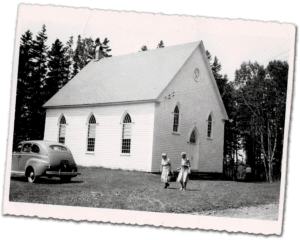
At Christmas in 1998, Fundy Folk was invited to host a seasonal concert up the hill at the historic Evergreen Baptist Church in East Margaretsville. Originally constructed in 1859, the church was blessed with natural, soaring acoustic resonance. The evening was a resounding triumph.
In early 1999, the congregation decided to decommission the building and offered the historic sanctuary to the community for public use. The Fundy Folk Association stepped forward with an ambitious vision: to transform the 19th-century house of worship into a dedicated community concert hall. Following enthusiastic community dialogue, the offer was accepted, and Fundy Folk took stewardship of the building.
A Gala Opening & CBC Radio (September 11, 1999)
Driven by an audacious board of directors, a grand plan was hatched. Fundy Folk secured a pivotal $13,000 grant from Arts Nova Scotia to commission original songs from regional songwriters, creating the Fundy Folk Songwriters Project which later toured across the province.
On September 11, 1999, the Evergreen Theatre officially opened its doors. Tickets priced at $10 sold out rapidly, and more than 200 excited patrons packed into the uncomfortable pews. CBC Radio recorded the entire evening, broadcasting the landmark celebration province-wide in a special three-part series. The Evergreen had arrived.
Transforming the Sanctuary (2000–2010)
Over the next decade, an army of community volunteers set to work turning the rustic sanctuary into a true performance venue:
- Surplus Stage & Drapery: Volunteers built a raised performance stage outfitted with salvaged theatrical lighting and curtains.
- The Seat Journey: In 2000, cast-off theatre seating from Centre Stage in Kentville replaced the stiff comfortable theatre seats. In 2010, these were upgraded with comfortable vintage velvet theatre seats salvaged from the historic Mount Saint Vincent Motherhouse in Halifax prior to its demolition—giving the 115-seat room its warm, timeless character.
Modernizing for the 21st Century (The 2018 Expansion)
For its first 15+ years of operation, concertgoers braved a charmingly rustic ritual: an infamous single outdoor portable toilet.
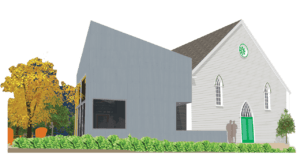
Following years of community fundraising and generous support from three levels of government, Nova Scotia heritage foundations, local businesses, and loyal donors, the Evergreen completed a major transformation in 2018. The new modern addition introduced a welcoming entrance lobby, a licensed bar featuring Nova Scotia craft cider, beer, and wine, five modern indoor restrooms, and a dedicated backstage green room for touring artists.
Today: Over 25 Years of Unforgettable Music
What began as an open-mic night at a village fire hall has evolved into one of the most respected listening rooms in Eastern Canada. Today, the Evergreen Theatre presents over 25 world-class concerts each season—bringing Juno Award winners, international touring icons, theatrical plays, and maritime roots masters to our mountain haven overlooking the Bay of Fundy.